
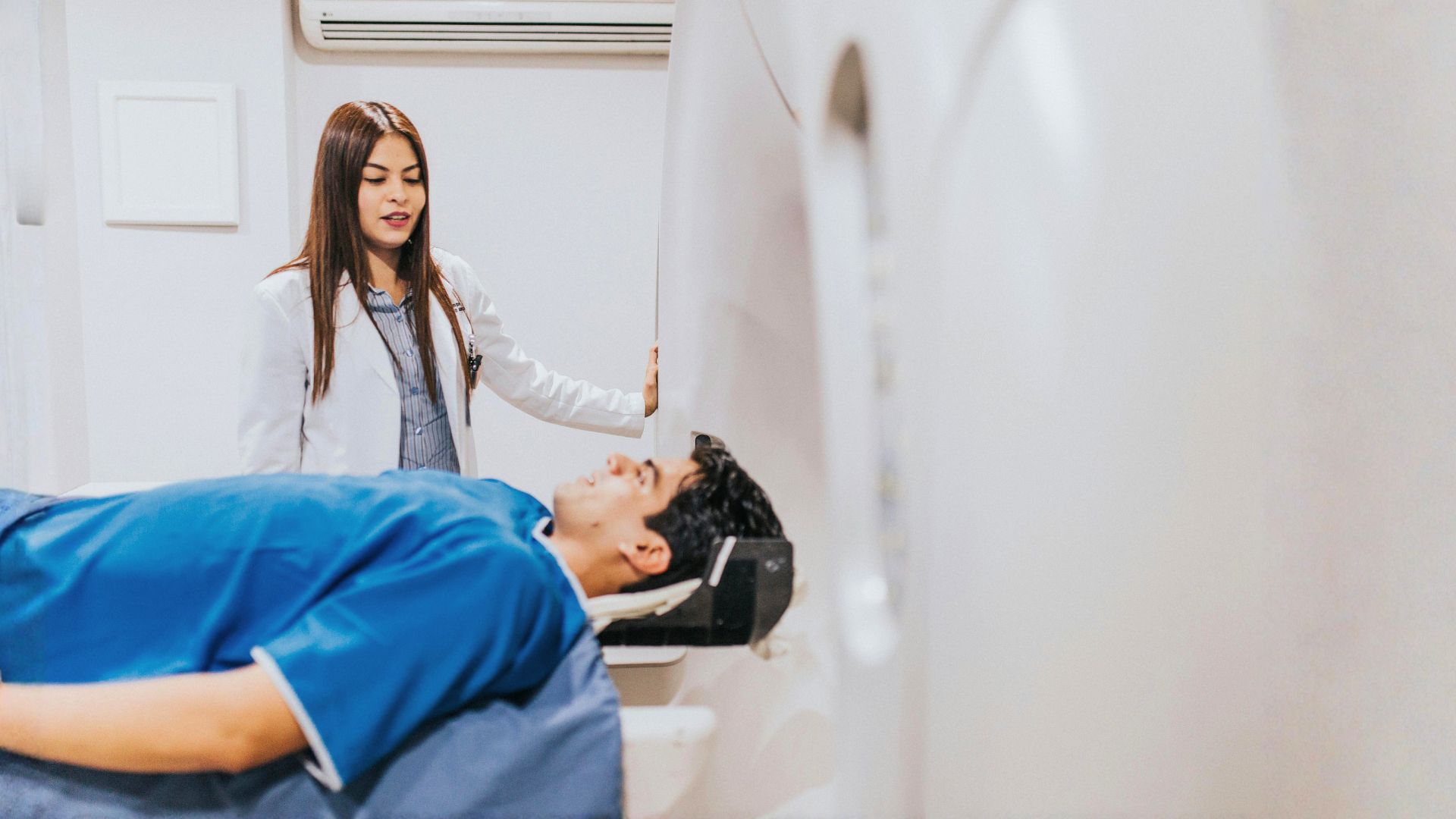
MRI Technologist Certificate
Train for a High-Demand Career in Advanced Diagnostic Imaging
The MRI Technologist Certificate Program prepares students for a rewarding career in the fast-growing field of diagnostic imaging. This intensive program combines structured classroom instruction with hands-on laboratory training and supervised clinical experience to develop skills in MRI physics, cross-sectional anatomy, patient positioning, safety protocols, and image evaluation. Upon completion, graduates earn a Certificate in Magnetic Resonance Imaging Technology and are prepared to pursue national certifications such as the ARRT and ARMRIT, qualifying them for careers in hospitals, outpatient imaging centers, and specialty clinics.
Program Snapshot
- Program Type: Certificate
- Duration: 12 Months
- Start Date: May 4th, 2026
- Format: Hybrid (In-Person Didactic Hours + Asynchronous Online Coursework)
- Hours Required: 540 Didactic Hours + 960 Supervised Clinical Hours
Curriculum Highlights
- Core Courses: MRI Physics & Principles I & II, Cross-Sectional Anatomy & Pathology I & II, Patient Care and Safety, MRI Procedures I & II
- Clinical Training: 960 Hours of Supervised Clinical Experience at a Leading Imaging Facility
Career Pathways
Graduates Are Prepared For Employment In:
- Hospitals
- Outpatient Imaging Centers
- Specialty Clinics
- Diagnostic Facilities
Certifications – Your Pathway to Employment
Graduates of the MRI Technologist Certificate Program are eligible to sit for the American Registry of Radiologic Technologists (AART) exam or the American Registry of Magnetic Resonance Imaging Technologists (ARMRIT) exam. Earning these certifications helps students meet recognized industry standards and qualify for employment after graduation.
Admission Requirements
- Associate Degree (Any Discipline) with a Minimum Cumulative GPA of 2.5
- Completion of Prerequisite Courses: Medical Terminology, Human Anatomy & Physiology I, General Physics, Healthcare Ethics & Legal Issues, College Algebra
- Applicants who have not completed these courses or have not satisfactorily completed these courses may be granted Provisional Acceptance and enroll in these courses at NWSC.
- Completed Application for Admission
- Interview with Admissions Team
- Background Check
- Proof of Current Health Insurance
Ready to Take the Next Step?
Our Admissions Team is here to help you explore the MRI Technologist Certificate program, guide you through the enrollment process, and support you every step of the way as you start your career in healthcare.