
MRI Technologist Certificate
Prepare for a Career as a Skilled MRI Technologist in Diagnostic Imaging
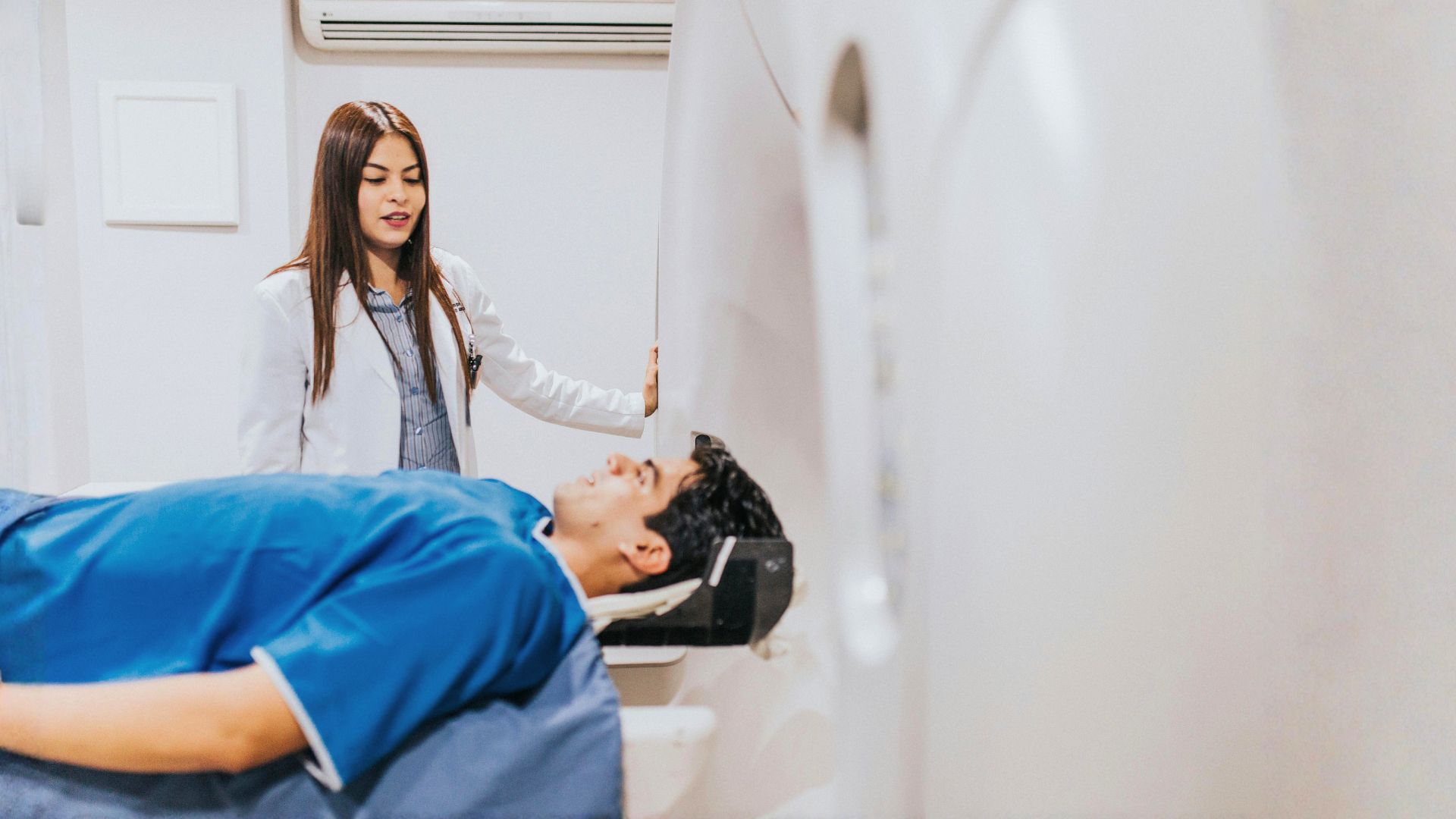
The Magnetic Resonance Imaging Technologist (MRI Tech) Program at NWSC prepares students for entry-level careers in medical imaging within hospitals, diagnostic imaging centers, outpatient facilities, and specialty clinics. MRI technologists play a critical role in modern healthcare by operating advanced imaging equipment to produce high-quality diagnostic images that assist physicians in evaluating, diagnosing, and treating medical conditions.
This program combines rigorous didactic instruction, laboratory training, and extensive supervised clinical education to ensure students develop both the technical competencies and professional behaviors required in diagnostic imaging environments.
Students gain knowledge and hands-on experience in MRI physics, instrumentation, cross-sectional anatomy, patient positioning, imaging protocols, safety procedures, contrast administration, and image evaluation. Emphasis is placed on patient care, critical thinking, professionalism, ethical practice, and adherence to industry safety standards.
Upon successful completion of the program, students are awarded a Certificate in Magnetic Resonance Imaging Technology.
Graduates may pursue national certification through the American Registry of Radiologic Technologists (ARRT). Eligibility for certification is determined by ARRT and requires completion of all educational, clinical, and examination requirements established by the certifying body.
Program Snapshot
Detail | Information |
Credential Awarded | Certificate in Magnetic Resonance Imaging Technology |
Total Program Length | 1500 Clock Hours |
Clinical Requirement | 960 Clock Hours |
Certification Eligibility | ARRT MRI Certification |
Duration | 12 Months |
Format | Hybrid |
Program Start | Enrollments every Fall, Winter, and Summer Terms |
Program Overview
The MRI Tech Program provides comprehensive education and training in diagnostic magnetic resonance imaging, preparing students to function as competent entry-level MRI technologists. Students develop skills in:
- MRI physics and imaging principles
- MRI equipment operation and instrumentation
- Cross-sectional anatomy and pathology recognition
- Patient care and positioning techniques
- MRI safety screening and compliance protocols
- Contrast media administration principles
- Image quality assessment and evaluation
- Clinical workflow and imaging procedures
The program emphasizes integration of classroom learning with laboratory practice and extensive clinical experiences to ensure graduates are fully prepared for real-world imaging environments.
Program of Study
The program consists of structured coursework delivered over three terms, totaling 1500 clock hours.
Term 1
Course Code | Course Title |
MRI 101 | MRI Physics and Principles I |
MRI 103 | Patient Care and Safety |
MRI 104 | MRI Procedures I |
MRI 201 | Cross-Sectional Anatomy & Pathology I |
MRI 301 | MRI Clinical Experience I |
Term 2
Course Code | Course Title |
MRI 102 | MRI Physics and Principles II |
MRI 105 | MRI Procedures II |
MRI 202 | Cross-Sectional Anatomy & Pathology II |
MRI 302 | Clinical Experience II |
Term 3
Course Code | Course Title |
MRI 303 | MRI Clinical Experience III |
Clinical Training Experience
Students complete extensive supervised clinical training designed to build real-world competency in MRI imaging procedures.
Clinical experience includes:
- Patient screening and preparation
- MRI scanning procedures
- Image acquisition and evaluation
- Safety protocols and compliance procedures
- Professional interaction with patients and healthcare teams
- Workflow participation in imaging departments
Program Learning Outcomes
Graduates of the MRI Tech Program will be able to:
- Demonstrate competence in operating MRI equipment and performing imaging procedures according to established protocols.
- Apply knowledge of anatomy, physiology, and pathology to accurately obtain diagnostic-quality images.
- Adhere to MRI safety standards, including screening, equipment operation, and patient monitoring.
- Exhibit effective communication skills with patients, families, and members of the healthcare team.
- Uphold the highest standards of professionalism, ethics, and cultural sensitivity.
- Demonstrate readiness for national certification and entry-level employment as an MRI technologist.
Occupational Objectives
Graduates of the MRI Tech Program are prepared for entry-level positions such as:
- MRI Technologist (Entry-Level)
- Radiology Imaging Assistant (MRI Support Roles)
- Diagnostic Imaging Technician
- Radiology Department Assistant
Employment opportunities are commonly found in:
- Hospitals
- Diagnostic imaging centers
- Outpatient imaging clinics
- Specialty medical facilities
- Physician practice imaging departments
Admission Requirements
- An associate degree of any discipline and minimum cumulative GPA of 2.5.
- For applicants who do not meet the minimum CGPA requirements, Provisional Acceptance may be granted upon review by the Admissions Committee. Speak to an Admissions Associate to learn more.
- Satisfactory completion of program prerequisite courses, including Medical Terminology, Human Anatomy & Physiology I, Healthcare Ethics and Legal Issues, College Algebra, and General Physics.
- For applicants who have not completed these courses or have not satisfactorily completed these courses, they may be granted Provisional Acceptance and enroll in the prerequisite courses at NWSC.
- Current CPR certification throughout the externship portion of the program
- Proof of vaccination
- Proof of current health insurance to participate in clinical education
- Background check
- 10-Panel Drug Test
Ready to Take the Next Step?
Our Admissions Team is here to help you explore the MRI Technologist Certificate program, guide you through the enrollment process, and support you every step of the way as you start your career in healthcare.